If you are considering Botox but are worried about looking ‘frozen’, understanding how treatment works and what contributes to a natural result can help you make an informed decision.
What does Botox actually do?
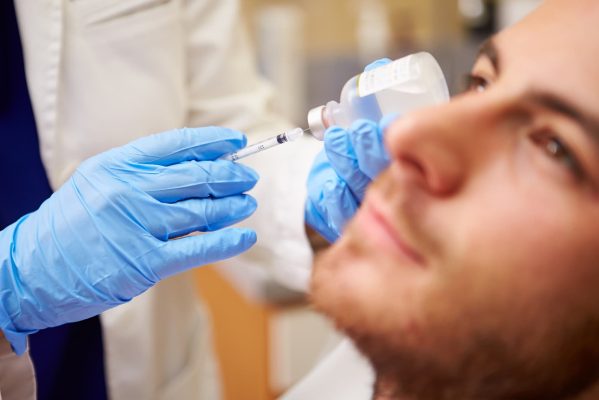
Botox is a brand name commonly used when talking about botulinum toxin treatments. It works by temporarily reducing the activity of specific muscles. When certain facial muscles repeatedly contract, they can contribute to dynamic lines and wrinkles.
By reducing muscle activity in carefully selected areas, Botox can soften the appearance of these lines. The treatment does not simply fill wrinkles or add volume to the skin. This is one of the key differences between Botox and dermal fillers.
Why might Botox look unnatural?
The ‘frozen’ appearance sometimes associated with Botox is generally linked to excessive treatment or an approach that does not adequately account for the individual’s facial anatomy and natural expressions.
Every face moves differently. The muscles involved in facial expression vary in strength and position, while factors such as age, skin condition and previous treatments can also affect the outcome.
Using the same treatment approach for everyone is therefore unlikely to produce the most natural-looking result.
A personalised assessment allows a practitioner to consider how your face moves and what you are hoping to achieve before deciding whether Botox is appropriate and where treatment may be administered.
Can you still make facial expressions after Botox?
A natural-looking Botox result does not necessarily mean eliminating facial movement altogether. The aim may be to reduce excessive muscle activity while retaining an appropriate degree of movement.
Exactly how much movement remains will depend on factors including the treatment area, dose and individual response.
It is important to discuss your expectations during your consultation. If your priority is to maintain plenty of facial expression, tell your practitioner. They can explain what may realistically be achieved and whether the treatment is suitable for your goals.
Does more Botox mean better results?
Not necessarily. Botox treatment is not simply a case of using as much product as possible. The amount required depends on the individual and the muscles being treated.
A practitioner should assess the areas being considered and determine an appropriate treatment approach. Using too much product may affect facial movement more than someone intended, which is why a measured, individualised approach matters.
The objective should be to treat the specific concerns you have rather than trying to change the character of your face.
What areas can Botox treat?
Botox is commonly used to soften certain dynamic facial lines. Depending on the practitioner’s assessment, this may include areas such as forehead lines, frown lines between the eyebrows and lines around the outer corners of the eyes.
However, Botox is not suitable for every type of wrinkle. Some lines are primarily caused by repeated muscle movement, while others can be associated with changes in skin quality, loss of volume or other factors.
In these situations, a different treatment may be more appropriate. This is where a professional consultation is particularly important.
Botox versus dermal fillers
Botox and dermal fillers are sometimes grouped together under the broad term ‘anti-wrinkle treatments’, but they work in different ways.
Botox temporarily reduces muscle activity. Dermal fillers, meanwhile, are injectable products used to add volume or alter the appearance of specific areas.
For example, dermal fillers may be used to restore volume or enhance certain facial features, depending on the product, treatment area and practitioner’s assessment.
How can you prepare for a natural result?
One of the most useful things you can do is be clear about what you want from treatment. Rather than simply asking to ‘get rid of wrinkles’, consider whether your priority is to soften particular lines, maintain facial movement or achieve a subtle change.
A consultation should give you an opportunity to discuss your concerns, ask questions and understand what the proposed treatment can and cannot achieve.
Is Botox right for you?
Botox can provide a subtle result, but expectations matter. It is a medical treatment, and the outcome can vary from person to person.
If you are concerned about looking unnatural, discuss this openly during your consultation. A practitioner can assess your facial movement, explain the available options and help you understand what a realistic result could look like.
Ultimately, natural-looking Botox is the result of appropriate treatment. The goal can be to soften the appearance of lines while preserving the characteristics and expressions that make your face your own.