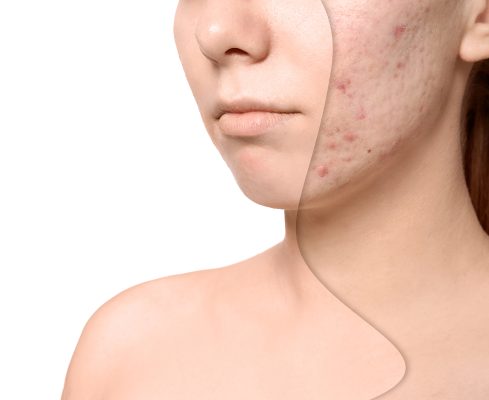
Smooth, clear skin is the ideal beauty goal for many of us, helping us to look our best and be at our most confident. If you are prone to breakouts or have acne scars, you may despair of ever feeling happy in your skin. However, modern cosmetic skin treatments are more effective and affordable than ever before.
At our skin clinic in Birmingham, we offer both laser cosmetic treatments and chemical peels that can help to reduce the appearance of acne breakouts and scars. Here’s a guide to understanding which ones might be right for you.
Chemical Peels
Chemical peels are a form of deep exfoliation using a chemical based solution. Different formulations can be used depending on the issue that is being addressed. A salicylic peel is used to rebalance oily and acne prone skin, by helping to regulate sebum production and reduce the frequency of breakouts and blemishes.
The chemical peel can also help to smooth the skin texture by removing dead skin cells and promoting the faster rejuvenation of the skin. This can minimise the appearance of minor acne scarring.
Who are chemical peels suitable for?
Chemical peels are best for those with milder acne and shallow scars. It’s a minimally invasive treatment that may cause some mild discomfort, but is not considered to be painful. Post-treatment, you will notice reduced acne inflammation, and your complexion will appear smoother, brighter and clearer.
It may not be suitable for those with very sensitive skin, and for a few days after the treatment, you can expect some redness, tightness and peeling of the skin. For best results, a course of repeat treatments is recommended.
Dermalux LED phototherapy
At our clinic, we offer a type of laser therapy known as Dermalux LED phototherapy, which works by applying highly focused infrared light energy to the targeted areas of skin. This has proven rejuvenation and repair effects on damaged skin cells, and it can be particularly beneficial for acne-prone skin.
The treatment incorporates blue light therapy, which helps to fight breakouts by destroying the bacteria that is involved in acne production. It also helps to balance oil production and improve the overall evenness of the skin tone.
Red light therapy is also a part of the treatment, and it can help to accelerate the process of skin renewal and repair, by stimulating the production of collagen and elastin. These are the proteins that give our skin its smooth and supple appearance.
Boosting production can help to smooth out skin that is damaged by acne scarring, minimising the appearance of deeper scars and even eliminating milder scarring after multiple treatments. The blue and red light therapies can be applied singly or in combination, depending on which areas of concern you want to target.
The benefits of laser acne treatment
After the treatment, you will notice that your complexion looks brighter and smoother, with minimised acne inflammation and scarring. The results are long lasting for many patients, particularly those who are prone to severe acne breakouts.
Many people find that the treatment rebalances the skin’s natural oil production, greatly reducing the frequency of spots and blemishes on a long-term basis. It’s possible to have repeat treatments if required.
Who is laser treatment most suitable for?
Laser treatments for acne have the ability to penetrate the deeper layers of the skin, so it’s particularly beneficial for those who have persistent cystic acne breakouts that do not respond to topical creams and gels such as benzoyl peroxide.
The treatment is also effective for reducing the appearance of raised or pitted acne scars. The rejuvenation of the skin’s repair cells helps the skin to regain some of its firmness and smoothness, and it can be particularly beneficial if this is your main area of concern.
If you have moderate to severe acne that has lasted for several months or even years, then this might be the right treatment for you.
Considerations for acne laser treatment
Laser treatment can have some side effects that may take several days to subside, so it may be necessary to factor in some post-treatment downtime. The most common side effects include increased sensitivity, redness, swelling, and peeling or scabbing of the skin.