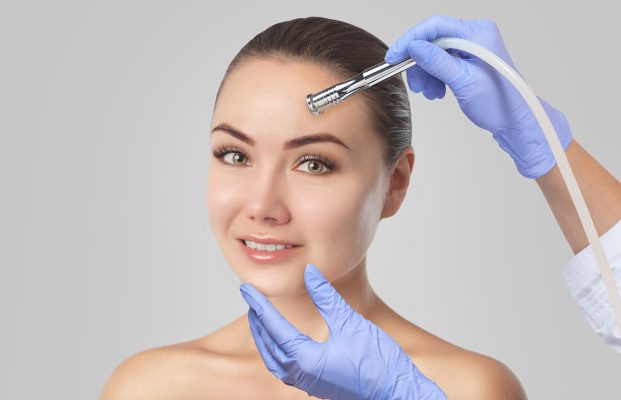
Hyperpigmentation is the darkening of certain patches of skin, caused by excess melanin production. It’s a common skin condition that doesn’t usually require medical treatment, but it can cause people to feel less confident about their appearance. There are a range of cosmetic solutions available, from laser treatment to chemical peels.
However, the various skin types and tones can manifest hyperpigmentation and respond to treatment in different ways. Here’s a look at the triggers and most effective treatments for light, medium and dark skin tones.
Light skin tones
People with lighter skin are more prone to hyperpigmentation caused by sun exposure, and it can often manifest as sun spots or freckles, particularly as we get older. The condition is more noticeable on lighter skin tones because the contrast with the surrounding area of skin is more marked.
The condition can also be triggered by skin injuries or acne scars. Prevention is obviously better than cure, and using a broad-spectrum sunscreen every time you go outdoors will help to prevent any existing spots from worsening or new ones from developing.
Less severe and extensive dark spots may be treated with topical creams with retinoids or vitamin C, which help to encourage the growth of skin cells when applied to the affected areas. Accompanying the treatment with gentle exfoliation will help to speed up skin cell turnover.
More severe and widespread hyperpigmentation on lighter skin can be treated with light therapy, laser therapy, or chemical peels.
Medium skin tones
Medium skin tones can also experience sun-related hyperpigmentation, and can also be prone to melasma (often triggered by hormonal changes such as pregnancy) and post-inflammatory hyperpigmentation (PIH), which is caused by wounds, scars or skin conditions such as acne.
To reduce hyperpigmentation or avoid it getting worse, it’s important to use sun protection everyday and cover up the arms and decolletage with light clothing. A wide brimmed hat and sunglasses can also add further protection to sunscreen.
Professional treatments such as laser therapy and chemical peels may be the most effective. However it’s important to discuss individual cases with a qualified skin therapist before committing to a course of treatment.
Darker skin tones
Darker skin tones are more prone to developing hyperpigmentation because it contains more melanin, which is the pigment on the outer layer of skin that gives it colour. It may be triggered more easily by a range of factors, including sun exposure, hormonal changes, injuries and even rashes.
Treating darker skin can be more complex, because it is more prone to side effects. It’s usually best to avoid more aggressive treatments such as harsh chemical peels, and proceed with caution with using laser or light treatments.
If you are considering professional treatment, ask how experienced the therapist is at treating darker skin, and always ensure they carry out a patch test to ascertain how your skin will react to the treatment.